

Students, parents and educators want one thing this school year: clarity. Students wonder, “How am I doing?,” “What do I need to do to improve?,” “Where do my grades stand?” We all check PowerSchool to see our progress and our grades, yet in PowerSchool, the percentages students and parents would typically see are absent.
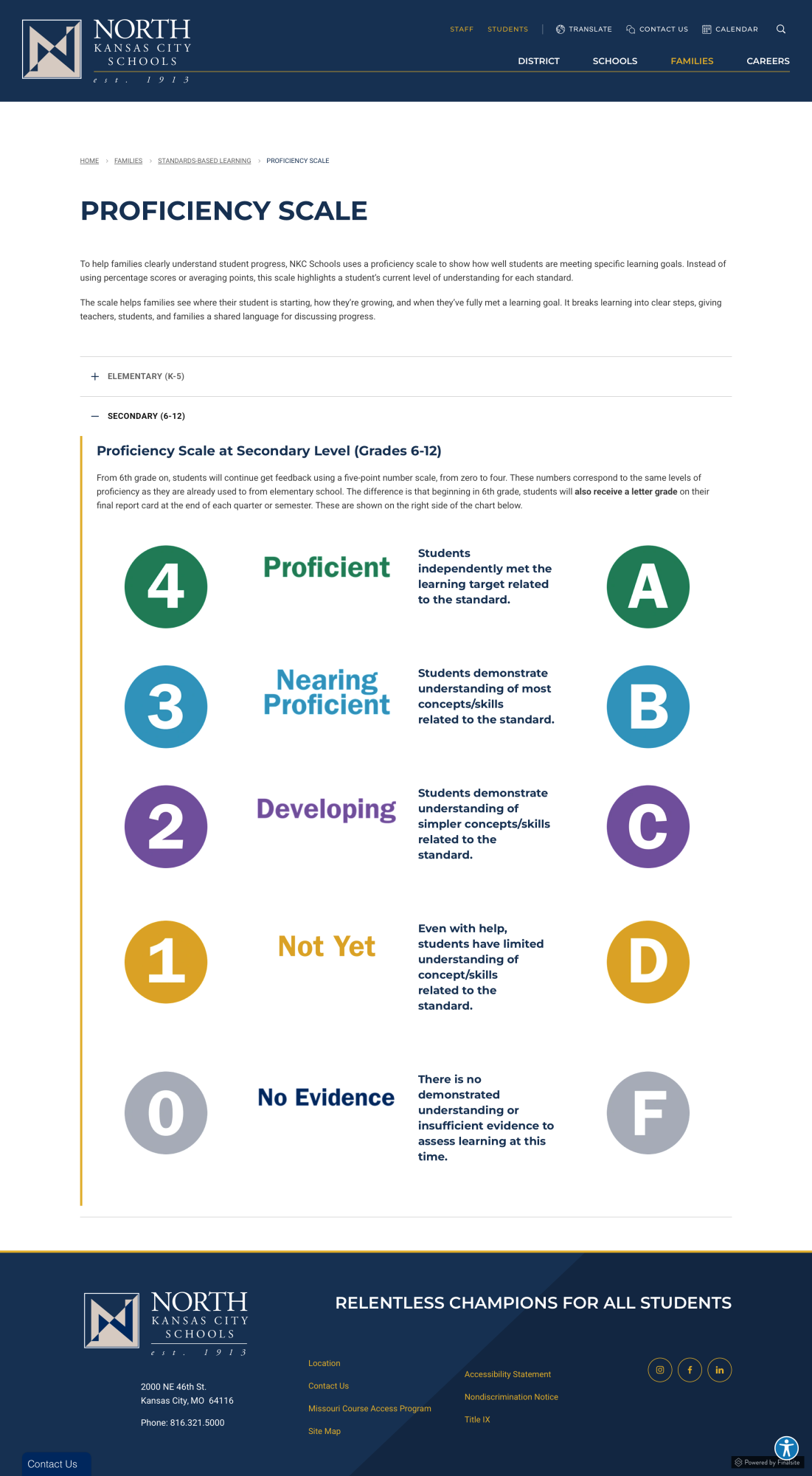
Percent grades are simple, clear and familiar. When I see 95%, I know I’m doing well. If I see 72%, I know I need to study more. With the new proficiency scales, it’s difficult to tell where our grades stand and what we can do to improve them. Having an 89% in a class is a lot different than having an 80% in a class. If we’re “developing,” are we close to passing? Are we failing? No one really knows. The North Kansas City School District uses a four-point proficiency scale to show how well students understand their learning goals. A 4 means proficient, a 3 means nearing proficient, a 2 means developing and a 1 means not yet. This scale is meant to help students track their progress and give everyone a clear way to talk about learning.
Parents who grew up with percentages are having an even harder time understanding the new grading system. When they check their child’s grades, they can’t tell how they’re doing. They want to support their kids, but without clear numbers, it’s like trying to read a grade card in another language.
Colleges don’t use “proficient” or “developing.” They use GPAs and percentages. If our schools want to prepare us for college, we need to see grades that match the system we’ll be graded by later in life. Having percentages in PowerSchool helps students track where their GPA stands, which is important for scholarships, sports eligibility and future opportunities.
When we see our grades as percentages, we can track progress and set goals. Seeing exact numbers helps us understand ourselves better as students. For example, maybe you notice you’re doing great in ELA with a 96%, but your math grade is an 81%. After seeing that, you realize where you need to put more of your focus on to succeed. With percentages, it’s easy to see which classes you are excelling in and which ones you need to put more effort into. Without PowerSchool showing percentages, we can’t tell exactly how we’re doing, and that makes it harder to stay motivated or know what to improve on.
We understand that the district wants to make their students’ education more successful, but showing grade percentages doesn’t stop that goal, it makes it better. Teachers can still use proficiency scales to describe learning targets, but PowerSchool should also show the percentages. We all want to understand our progress and feel confident about where we stand. Taking percentages off PowerSchool was meant to help, but instead, it’s caused confusion and frustration. If the district truly cares about communication, motivation and preparing students for the future, it’s time to bring back percentage grades in PowerSchool.