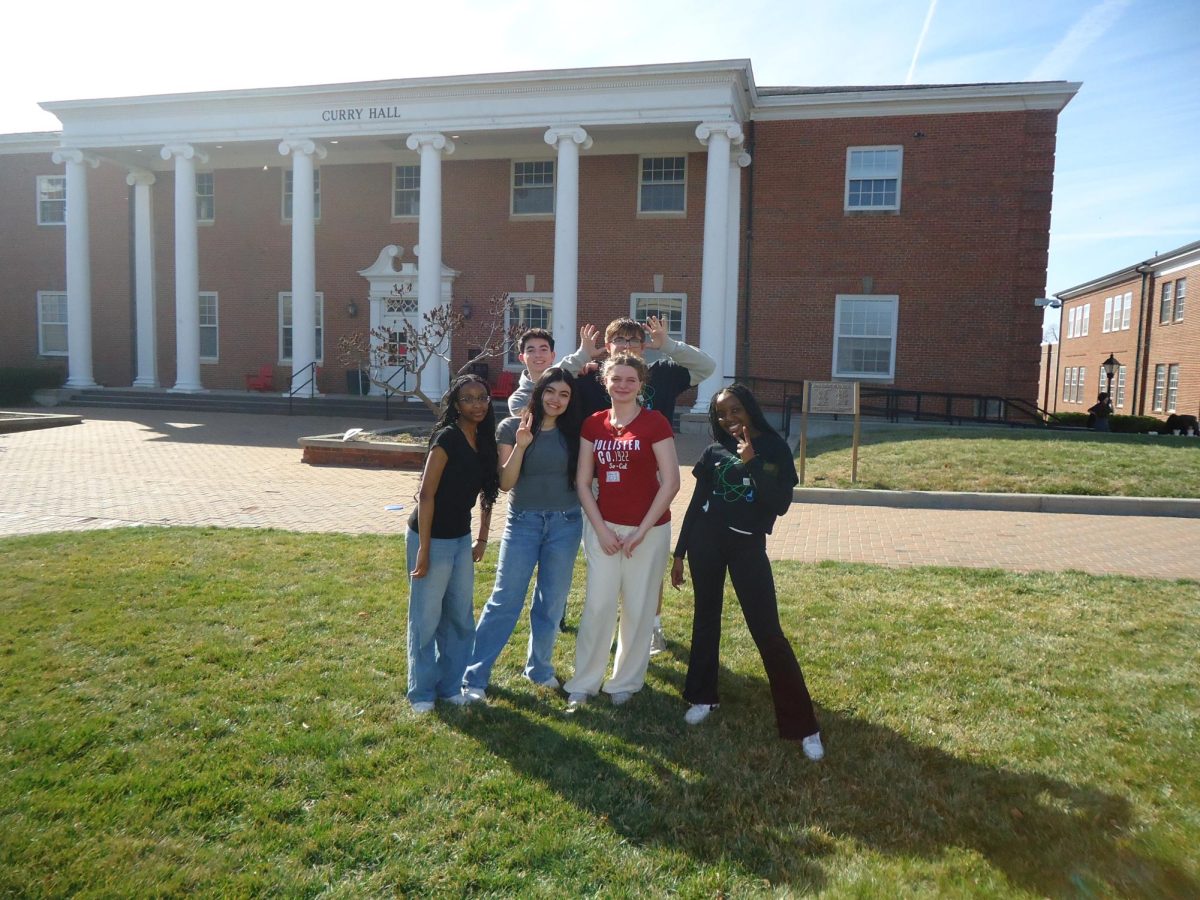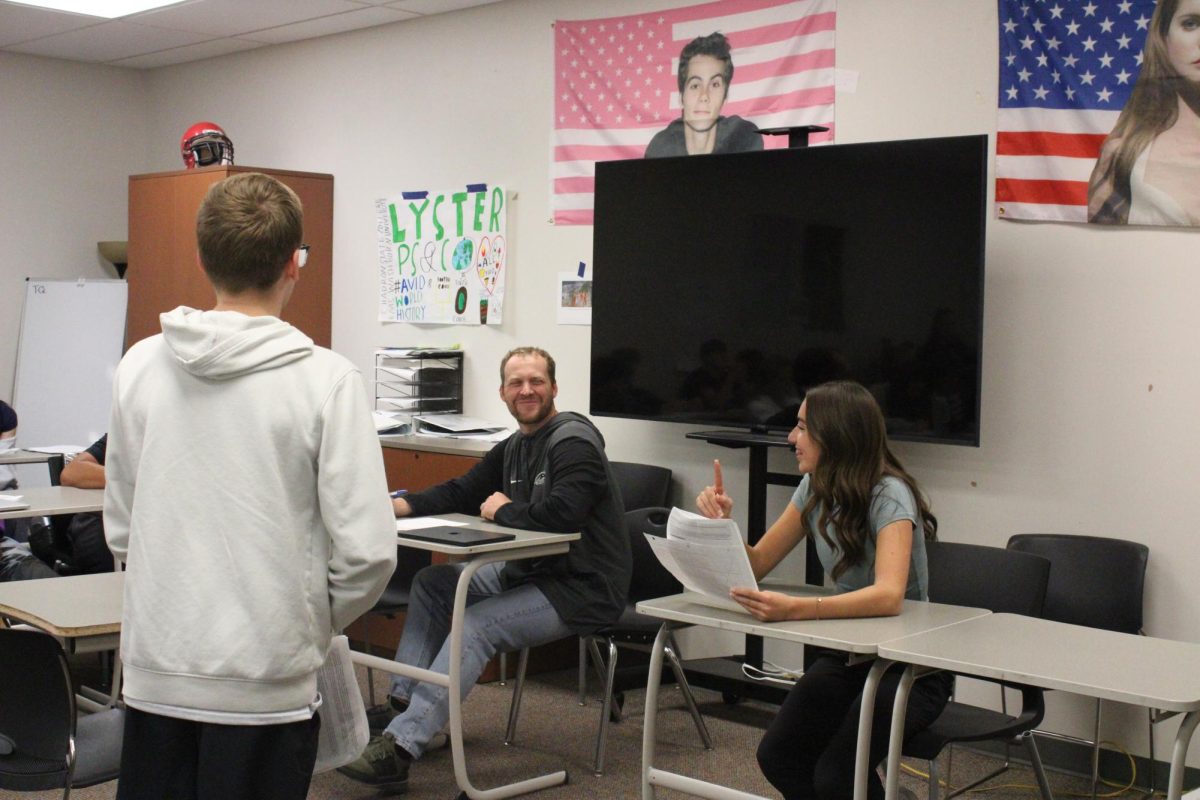

The Science Olympiad team is heading to state after being sixth place at regionals, where every team member earned at least one medal.
“It was really magical because I’m guessing last year not a lot of people got medals,” sophomore Melodee Louis-Loradin said.” “So this year we got medals, and it was just so much more fun and so happy for all of us. Everyone was just so happy because we all placed one through six.”
Chemistry and Biomedical innovations teacher Timothy Ellis said he is enthusiastic about his team’s performance at regionals.
“This is the first time we got to state since I’ve been in the Science Olympiad,” Ellis said. “Going from not medaling earlier in the year to everyone medaling at regionals is a pretty big jump.”
Ellis said Science Olympiad gives many different opportunities for students to find what area of science they are most interested in.
“It’s a variety of different events that students choose to compete in, anywhere from tests to labs to building an electric vehicle to see how far it can travel,” Ellis said.
“Science Olympiad is a club where we have a bunch of different science events, and you get to choose which event you want to compete at state,” Louis-Loradin said. “There’s building ones, one with coding, one where you talk about bugs, but they’re all science related.”
A typical Science Olympiad tournament begins early in the morning and lasts all day long. Participants rotate between events during the morning and afternoon, and in the evening events are scored and awards are given.
Junior Caden Grossman, who competes in events such as astronomy, entomology and epidemiology, said tournaments allow students to test both their knowledge and their problem-solving skills.
“Some of the events you take a test on the topic to see what you know, and some you have to construct a vehicle or some kind of contraption,” Grossman said. “Everyone there is really like-minded, so it’s a lot of fun.”
Grossman also said Science Olympiad has helped him find people to connect and be friends with.
“It’s helped me find my niche,” Grossman said. “Being able to be in a science club helped me find groups of others with similar interests.”
Louis-Loradin agreed with Grossman.
“I stay after school on Wednesdays, and it’s really fun,” Louis-Loradin said. “I’ve also met some really nice people and I think I can call them my friends now.”
For sophomore Ellie Rice, the club is both academic and social.
“It’s just a fun club,” Rice said. “We do things like building electronics or taking tests over science topics. I personally do entomology, which is the study of bugs.”
Despite competing against much larger teams, the team was able to succeed.
“Oak Park had multiple people,” Rice said. “They have like three teams, and that means they have like over 30 people. We only have nine.”
With strong performances, a growing team and a supportive adviser, Science Olympiad is continuing to build momentum as it prepares for state.
“I’ve never done it before,” Grossman said. “Even if we don’t do great at state, it’ll be fun that we got there at all.”